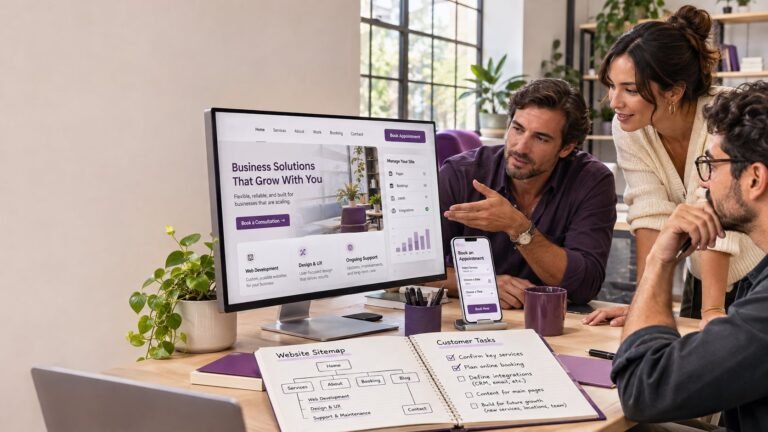

Custom WordPress development for growing businesses can help when a standard website setup no longer supports the company’s requirements. A business may need a distinctive customer journey, specialized forms, a product configuration tool, or integrations that are not covered by a basic theme and plugin setup.
Custom development is not automatically the right choice for every company. It requires planning and can add implementation and maintenance responsibilities. The best approach is to compare the business need with the simplest reliable solution that can meet it.
What custom WordPress development can include
Custom work may involve creating page templates, adjusting how content is managed, building specific website features, or connecting the site to external systems. The scope varies by project.
For example, a business might need a searchable directory, a tailored booking flow, a membership area, or a product catalog with specific filters. These features should be planned around actual customer tasks and business processes.
Before development, describe the problem in everyday terms. Who needs to use the feature? What information will they provide or receive? What should happen after they complete the task? Clear answers help developers recommend an appropriate solution.
When a standard theme or plugin may be enough
A standard WordPress theme or established plugin can be a practical option when it meets the business’s needs without major compromises. It may be suitable for common requirements such as publishing articles, displaying services, or collecting basic inquiries.
However, adding several plugins to work around a poor fit can create a complicated setup. Review how the tools work together, who will maintain them, and whether the site owner can update them safely.
A developer can help assess whether a theme or plugin already solves the problem or whether custom development is justified. This decision should consider the project’s budget, expected usage, and long-term maintenance.
Design for the people using the website
Custom development should improve how customers and staff use the site. A feature may function correctly but still confuse users if its layout, labels, or instructions are unclear.
Map the steps people need to complete before building the feature. Then review the design on mobile and desktop, test the form or workflow with realistic examples, and remove unnecessary steps.
Good user experience also depends on the rest of the website. The new feature should fit the site’s navigation, content, and calls to action instead of feeling like a separate system.
Plan integrations carefully
A custom WordPress site may need to exchange information with a booking service, payment provider, customer relationship management system, or other business tool. Integration planning should cover which information is sent, when it is sent, and how errors are handled.
Ask who will monitor the connection and what happens if a connected service changes. These details can affect both development and ongoing support.
Consider long-term ownership
A custom feature becomes part of the business’s website operations. Before approving it, clarify who owns the code and accounts, how documentation will be provided, and how future updates or troubleshooting will be handled.
This discussion helps the company avoid relying on undocumented processes or losing access to important systems when staff or vendors change.
Frequently asked questions
Does custom WordPress development mean building everything from scratch?
No. A project can combine existing WordPress tools with custom work where needed. The right balance depends on the requirements.
Will custom features make the website harder to maintain?
They can add maintenance needs. Clear documentation, appropriate testing, and a support plan help the business manage those responsibilities.
How should we decide whether to build a custom feature?
Start with the customer or operational problem. Compare available tools, required integrations, costs, and long-term support needs before choosing an approach.
Custom development is most valuable when it solves a specific business problem and remains manageable after launch. An expert can help your team define the requirements before development begins.
Considering a custom WordPress feature? Get expert advice for your business to assess the requirements and suitable development options.