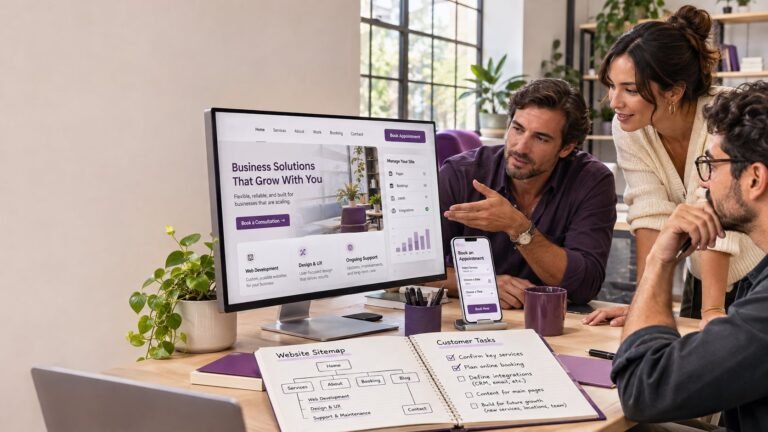

The WordPress website development process should connect a company’s goals with the needs of its customers and staff. A clear process helps the business make decisions in the right order, understand project responsibilities, and prepare for the work required after launch.
Every project is different, but a structured approach usually includes discovery, planning, design, development, testing, deployment, and ongoing support.
1. Discovery and business analysis
The project begins by understanding the business, its audience, and the purpose of the website. This includes reviewing current services, customer questions, existing content, business processes, and the problems the current website needs to solve.
The team should agree on the main outcomes. These could include increasing qualified inquiries, making it easier to book services, supporting online sales, or improving how customers find information.
2. Site planning and requirements
Next, organize the pages and identify the features required. This may include service pages, a blog, a portfolio, forms, ecommerce, booking tools, or integrations with existing systems.
Separate essential requirements from future improvements. This gives the project a manageable scope and helps the business understand which decisions must be made before development begins.
3. WordPress architecture and platform decisions
The development team determines how the site will be structured and managed. This includes selecting an appropriate theme or design approach, defining page templates, planning content types, and reviewing plugin or integration requirements.
The business should be involved in decisions about who will maintain the site and what kinds of updates staff need to make. Those responsibilities can influence the platform configuration and training plan.
4. UI and UX design
Design focuses on how information is presented and how visitors move through the site. The team considers navigation, page hierarchy, mobile layouts, calls to action, forms, and visual consistency.
Review designs against real user tasks. A visitor should be able to understand a service, locate relevant details, and complete the intended action without unnecessary confusion.
5. Development and integration
Once the structure and design are agreed, the site is developed in WordPress. This may include configuring the content management system, building templates, adding features, and connecting required third-party tools.
Integrations should be tested with realistic data and usage scenarios. The project team should also document any decisions that will affect future updates or support.
6. Testing and quality assurance
Before launch, test the site across common screen sizes and browsers. Check page content, menus, forms, links, images, performance, and any booking or payment process.
Confirm that inquiries reach the right team and that staff know how to make routine content changes. Testing should cover both the visitor experience and the business processes behind the website.
7. Deployment, onboarding, and support
The launch stage includes preparing the live website, confirming key settings, and checking important pages after deployment. If staff will manage content, provide guidance so they can complete routine updates confidently.
After launch, plan for maintenance, support requests, performance reviews, and future improvements. A website should adapt as the company’s needs change.
Frequently asked questions
How long does WordPress website development take?
The timeline depends on the project scope, content readiness, features, integrations, and review process. Ask the provider to explain the stages and dependencies.
Who should provide the website content?
The business should confirm that service information, policies, and company details are accurate. Writing and editing support can be included if agreed in the project scope.
What should happen before launch?
Test the site, review content, confirm forms and integrations, prepare hosting and support arrangements, and ensure the team knows how to manage the site.
A structured process helps companies avoid unclear requirements and rushed decisions. The right project plan should reflect both customer needs and the team’s ability to maintain the website.
Planning a WordPress project? Speak with a WordPress development expert to map the right process and scope for your business.